
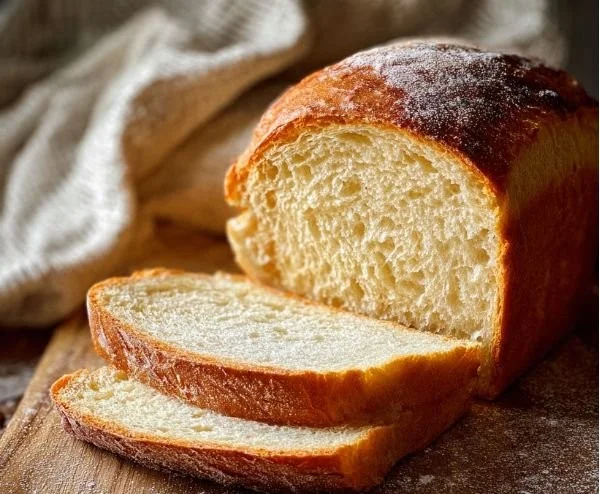
I’ve baked this simple, classic Homemade White Bread dozens of times and I still love the warm, comforting slice straight from the oven. This loaf browns to a golden crust and stays soft inside, making it perfect for sandwiches, toast, or just butter and honey. If you enjoy trying small bread projects too, you might like my orange twist breadsticks with sweet glaze for a sweet-savory pairing.
Why Make This Recipe
- It delivers a soft, tender crumb and a thin, crisp crust that most store loaves lack.
- The ingredients are pantry-stable and inexpensive — flour, yeast, salt, a bit of sugar and fat.
- It’s versatile: great for sandwiches, French toast, or as a dinner table loaf for a weeknight meal.
- You can make it in one loaf pan in about 3 hours from start to finish, which is efficient for home baking.
- I love this recipe because the dough is forgiving — even if you under-knead a little, it still tastes great; try pairing it with warm homemade garlic bread rolls for a garlic-butter feast.
Recipe Overview
- Prep time: 20 minutes active; plus 1 hour first rise and 30–45 minutes second rise.
- Cook time: 25–30 minutes at 350°F (175°C).
- Total time: about 2 hours 15 minutes to 2 hours 45 minutes (including rising).
- Servings: 10–12 slices (1 standard 9×5-inch loaf).
- Difficulty: Easy — great for beginners who want to learn yeast bread basics.
- Cooking method: Mix, knead (by hand or mixer), bulk rise, shape into a loaf, final proof, then bake.
For a comforting grain contrast, this loaf also pairs well with a slice of homemade Mexican cornbread at brunch.
My Experience Making This Recipe
I tested this version many times to get a reliably soft interior and a good oven rise. Early tests taught me how much warm liquid the flour actually needs; ambient humidity changes the dough feel. I now aim for a slightly tacky dough and consistent 1–2 hour bulk rises for the best texture.
How to Make Homemade White Bread
This bread uses active dry yeast (or instant yeast) with warm water, a little sugar, salt, flour, and fat (butter or oil). You’ll mix the ingredients, knead until smooth and elastic (about 8–10 minutes by hand or 5–6 minutes in a stand mixer with a dough hook), let the dough double during the first rise, shape it into a loaf, proof until puffy, then bake at 350°F (175°C) for 25–30 minutes in a greased 9×5-inch loaf pan. Expect a glossy, golden top — brush with melted butter right out of the oven for a softer crust.
Ingredients (one 9×5-inch loaf)
- 1 cup (240 ml) warm water, 105–115°F (40–46°C)
- 2 tbsp (25 g) granulated sugar
- 2 1/4 tsp (7 g, 1 packet) active dry yeast
- 2 tbsp (28 g) unsalted butter, softened (or 2 tbsp olive oil)
- 1 1/2 tsp (8–9 g) salt
- 3 to 3 1/4 cups (360–390 g) all-purpose or bread flour
Basic method highlights:
- Bloom yeast in warm water with sugar for 5–10 minutes if using active dry yeast; skip bloom for instant yeast and mix directly.
- Knead until the dough becomes smooth and passes the windowpane test (thin translucent membrane when stretched).
- First rise: 1–1.5 hours at room temp until doubled. Second rise: 30–45 minutes after shaping.
- Bake at 350°F (175°C) for 25–30 minutes; internal temp should be ~190–200°F (88–93°C) when done.
Expert Tips for Success
- Use an instant-read thermometer to check liquid temperature; 105–115°F (40–46°C) wakes yeast without killing it. A thermometer removes guesswork.
- For a stronger loaf, use 50–100% bread flour (higher protein) or add 1–2 tbsp vital wheat gluten to the mix. This improves structure and oven spring.
- If kneading by hand, use the stretch-and-fold method in the last 5 minutes to develop gluten without overworking the dough. For flavor variations, see my Italian herbs and cheese bread homemade loaf.
- Give the dough enough time to rise; underproofed dough will be dense, while slight overproofing can flatten the loaf in the oven. Aim for a clear doubling in volume at room temperature.
- Brush the top with milk for a shinier brown crust, or melted butter for a softer crust; place the loaf on the middle rack for even browning.
How to Serve Homemade White Bread
- Slice it thick for grilled cheese — the soft crumb makes a melty, pillowy sandwich.
- Turn day-old slices into excellent toast or French toast; the bread soaks custard well.
- Serve warm with compound butter and a scattering of flaky salt for a simple, elegant side at dinner.
- Present on a wooden board with small bowls of olive oil, balsamic, and herbs for a casual appetizer platter.
Storage and Reheating Guide
- At room temperature: store wrapped in plastic wrap or a reusable bag for up to 3–4 days. Keep it in a cool, dry place away from direct sunlight.
- In the refrigerator: not recommended for long-term storage; refrigeration dries bread faster. Use only if your kitchen is very humid.
- Freezing: slice the loaf, wrap individual slices or the whole loaf tightly in plastic, then foil; freeze up to 3 months. Thaw on the counter or toast slices directly from the freezer.
- Reheating: for a fresh-baked feel, warm slices in a 350°F (175°C) oven for 5–8 minutes or toast slices until golden; cover loosely with foil to keep moisture.
Recipe Variations
- Whole-wheat blend: replace up to 50% of the flour with whole-wheat flour and increase water by 2–3 tbsp to compensate. Expect a denser crumb.
- Dairy-free: swap butter for olive oil or a neutral vegetable oil and use water as the liquid — otherwise follow the same steps.
- Enriched milk loaf: replace the water with warm whole milk and add 1 beaten egg for a richer, softer crumb. Adjust rise times slightly as enriched doughs rise faster.
- Seeded or herbed: fold 1/2 cup seeds (sunflower, flax, sesame) or 1–2 tbsp chopped fresh herbs into the dough during the final minute of kneading for texture and flavor.
Nutritional Highlights
- This bread is a good source of carbohydrates for energy and is low in added sugar when kept to the recipe’s 2 tbsp.
- By choosing whole-grain flour in a variation, you’ll increase fiber and micronutrients.
- Allergen info: contains wheat (gluten) and typically dairy (butter) unless you choose a dairy-free variation. One slice is roughly 100–150 calories depending on thickness and added fats — use portion control if tracking intake.
Troubleshooting Common Issues
- Dense loaf: likely under-kneaded or underproofed. Knead until smooth and elastic and allow the dough to double in volume during the first rise.
- Flat or collapsed top: dough may have been overproofed or too wet. Reduce final proof time, and ensure you shape the loaf tightly before the second rise.
- Gummy or doughy center after baking: oven temperature might be too low or baking time too short. Check internal temp with a thermometer — aim for 190–200°F (88–93°C).
Frequently Asked Questions
Q: Can I use instant yeast instead of active dry yeast?
A: Yes. Instant yeast can be mixed directly with the dry ingredients without blooming. Use the same amount (2 1/4 tsp for one loaf) and expect slightly faster rise times. Watch the dough rather than the clock.
Q: How do I know when the bread is fully baked?
A: Use an instant-read thermometer — the crumb is done at 190–200°F (88–93°C). You can also tap the bottom of the loaf; it should sound hollow. Visual cues like a deep golden top help, but temperature is most reliable.
Q: Can I make this by hand without a stand mixer?
A: Absolutely. Knead by hand for 8–12 minutes until the dough is smooth and elastic. Use a bench scraper to help fold and turn the dough; the stretch-and-fold technique helps develop gluten without overworking.
Q: What if my kitchen is cold and the dough isn’t rising?
A: Create a warm proofing spot: turn the oven on to 200°F (93°C) for 1–2 minutes, then turn it off and place the covered dough inside with the oven light on. Alternatively, proof on top of a warm appliance or in a warm, draft-free room. Avoid temperatures over 120°F (49°C) which can kill yeast.
Conclusion
If you want a detailed step-by-step tutorial with extra photos and troubleshooting notes, check this helpful detailed homemade bread tutorial from Tastes Better from Scratch for additional visual guidance and variations.
Print
Homemade White Bread
- Total Time: 135 minutes
- Yield: 10-12 slices
- Diet: Vegetarian
Description
A warm, comforting homemade white bread with a golden crust and soft interior, perfect for sandwiches and toast.
Ingredients
- 1 cup (240 ml) warm water, 105–115°F (40–46°C)
- 2 tbsp (25 g) granulated sugar
- 2 1/4 tsp (7 g, 1 packet) active dry yeast
- 2 tbsp (28 g) unsalted butter, softened (or 2 tbsp olive oil)
- 1 1/2 tsp (8–9 g) salt
- 3 to 3 1/4 cups (360–390 g) all-purpose or bread flour
Instructions
- Bloom yeast in warm water with sugar for 5–10 minutes if using active dry yeast; skip bloom for instant yeast and mix directly.
- Knead until the dough becomes smooth and passes the windowpane test (thin translucent membrane when stretched).
- First rise: 1–1.5 hours at room temp until doubled.
- Second rise: 30–45 minutes after shaping.
- Bake at 350°F (175°C) for 25–30 minutes; internal temp should be ~190–200°F (88–93°C) when done.
Notes
Use an instant-read thermometer to check liquid temperature to ensure yeast activation without killing it.
- Prep Time: 20 minutes
- Cook Time: 30 minutes
- Category: Baked Goods
- Method: Baking
- Cuisine: American